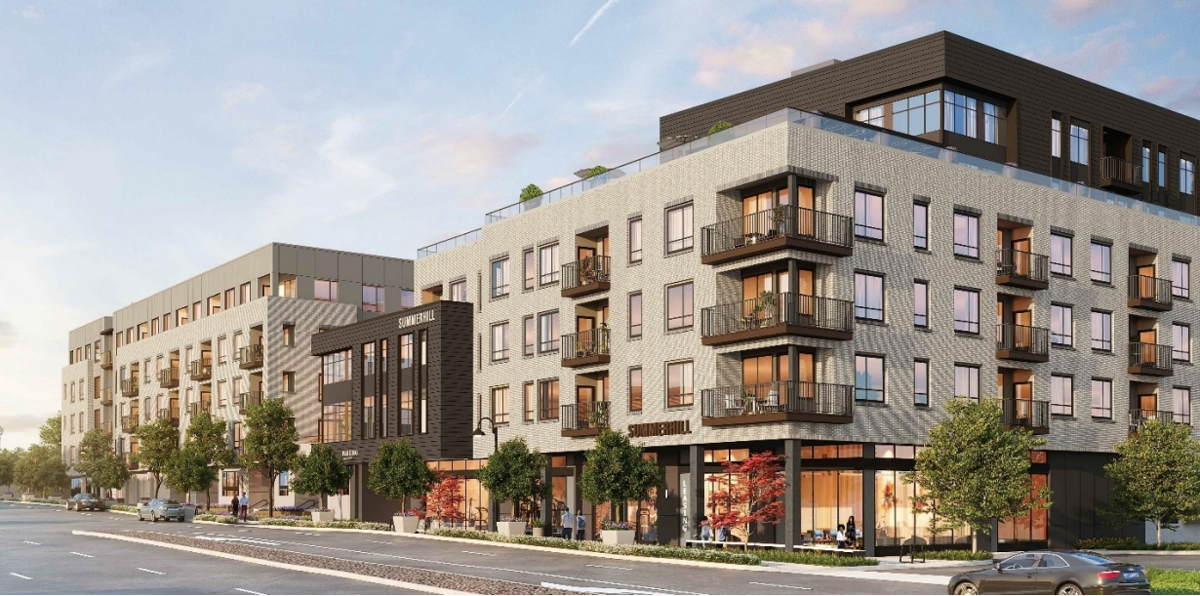
Housing Element Update: Feb 26, 2024 Balancing Community Needs: Navigating Housing Development in Daly City's JUHSD Proposal

Housing Element Update: Feb 26, 2024 Balancing Community Needs: Navigating Housing Development in Daly City's JUHSD Proposal

Fundamentally, Daly City has imposed too many requirements on the JUHSD proposal for the project to pencil with current interest rates. State law requires the development to include a minimum of 20% affordable homes–the project is almost 25% affordable–and to pay prevailing wage. 

Yet some members of Daly City’s council want more. On top of the legally required community benefits of affordable homes and labor standards, the council has already pushed the school district to set aside a large portion of the project for open space, limiting the viable number of homes, and to pay for substantial infrastructure improvements in the surrounding area. At this stage in the process, asking for more “compromises” is equivalent to blocking the housing. 

Rather than demanding more concessions, the city should provide incentives to enable housing at JUHSD and achieve housing element compliance. Beyond making concessions to the school district regarding the community benefits the city has demanded, Daly City’s leaders can:

  • Waive or defer impact fees
  • Expedite building permits
  • Dedicate building & planning staff time exclusively to ensure the project overcomes any barriers that arise

HLC is committed to supporting Daly City’s efforts to enable more affordable homes at JUHSD and throughout the city. 

What policies would you prioritize to prevent evictions and forestall the displacement of lower-income families from San Mateo County? Thrive Alliance and Leadership Council hold Candidate Forum for D4 Board of Supervisors Seat

Is what we asked at the Thrive Alliance Candidate Forum on January 30th. Candidates Celeste Brevard, Paul Bocanegra, Antonio Lopez, Maggie Cornejo, and Lisa Gauthier joined us at the Menlo Park City Council Chambers for a discussion night. Paola, an organizer with HLC, represented us and the Anti-Displacement Coalition by asking: What policies would you prioritize to prevent evictions and forestall the displacement of lower-income families from San Mateo County? 

Here are their responses:

Candidate Celeste Brevard affirmed her commitment to supporting ballot initiatives akin to the Fair Housing Ordinance that Faith in Action is spearheading in Redwood City. She said she would support initiatives that limit rent increases and expand tenants’ right to return. Additionally, she emphasized her intent to collaborate closely with existing organizations, learn more about the most significant issues, and cultivate policy solutions to remedy the problems. Brevard also said that protecting landlords and the economy can be done in tandem with protecting families who rent.

Candidate Paul Bocanegra followed, expressing his strong support for a comprehensive County-wide rental registry that comes with a task force that oversees rental developments– primarily overseeing the habitability of living conditions, especially for the immigrant community. Bocanegra highlighted the tragic 2023 Half Moon Bay shooting and sympathized with those forced to endure such conditions. He underscored his stance that landlords neglecting their responsibility to uphold acceptable living standards will face legal consequences. He adds that he will advocate for more protections for youth and seniors.

Candidate Antonio Lopez starts by discussing the injustice faced by commuters coming to work in San Mateo County but living miles away. This issue is a transportation issue and an environmental issue. He says housing is the civil rights issue of our time and talks about solutions that work, like the BAHFA Bond and Project Homekey, but ultimately, housing across income levels needs to be built throughout the county. Every city needs to do its part to house San Mateo County’s growing population.

Candidate Maggie Cornejo opened up by sharing her experience of advocating for her entire building living with a pest infestation because her neighbors refused to speak up due to fear of eviction. If elected, she wants to set aside some investments to partner with legal aid to help fight cases where tenants are too afraid to voice their concerns. She also wants the Tenant Protections Ordinance to pass. That way, the community’s most vulnerable members do not have to live in fear of speaking up or being evicted. 

Candidate Lisa Gauthier talked about how East Palo Alto has been the poster city for creating rent stabilization and tenant protections that help the most vulnerable residents. She feels that there needs to be ordinances from the Board of Supervisors that allow for more expansive rental assistance and rent stabilization. She said Costa Hawkins must also be addressed so that rent-stabilized units do not go up to market rate once vacated. Gauthier also expressed support for creating jobs that allow people to stay here. She highlighted that these types of programs are most needed to protect tenants, specifically rent control and stabilization.

To watch the Candidate Forum and find out what the Candidates had to say about other pressing issues, click here.

San Mateo County Passes Ordinance Regulating Homeless Encampments Potential risks abound as the County seeks to encourage unhoused residents to take advantage of available services

Last Tuesday, January 23, San Mateo County’s Board of Supervisors voted unanimously to approve the “Hopeful Horizons” ordinance, which creates a process by which the County can clear homeless encampments whenever shelter beds are available. 

Speakers from the ACLU Northern California Chapter, San Mateo County’s Public Defenders program, and other civil rights organizations raised concerns about potential ambiguities in the ordinance that could harm unsheltered residents. In response to public comment, the Supervisors made several important amendments, including semi-annual auditing, while ignoring others. HLC and our partners will closely monitor implementation of this ordinance to ensure it has its intended impact. 

The ordinance would:

  • Allow the County to clear homeless encampments on unincorporated land whenever a shelter bed is available, after Homeless Outreach Teams have already contacted residents. 
  • Creates a process for outreach and warnings by which the County may clear encampments. 
  • Empower the County to issue criminal penalties, potentially a misdemeanor, to residents who ignore clearance orders and do not take advantage of available shelter.
  • Enable residents who receive criminal penalties to expunge their records by seeking mental health support. 
  • Require the County to label and store personal belongings in excess of what can fit in available shelter, at no cost to residents. 
  • Mandate audits of the program at six and twelve months after implementation to ensure efficacy and reevaluate as needed. 

County Supervisors Ray Mueller and Noelia Corzo suggested important amendments to make the ordinance more effective. Both emphasized the necessity to guarantee qualified professionals provide outreach and mental health assessments before enforcement clears encampments. They also mandated bi-annual audits, which will help the Supervisors monitor implementation of this ordinance.

The Housing Leadership Council and other partners remain concerned that vague language in this ordinance could lead to abuses. As written, the ordinance leaves several ambiguities as to how the County will ensure public accountability, properly verify and store an individual’s belongings, and track outcomes. However, we support the Supervisors’ intent look forward to working with the Board and our partners to promote Housing First strategies to addressing the housing crisis.

East Palo Alto Opportunity to Purchase Act Rejected What you need to know

Update

We would like to extend our appreciation to Councilmembers Ruben Abrica and Carlos Romero for their unwavering support for the East Palo Alto Opportunity to Purchase Act (EPA OPA). Unfortunately, on the night of December 5th, leaders on the East Palo Alto (EPA) City Council voted 3-2 to reject the EPA OPA

What is an Opportunity to Purchase Act

An Opportunity to Purchase Act (OPA) policy gives renters in your community a chance to become homeowners when their landlords want to sell. Eligible buyers such as tenants, affordable housing developers, community land trusts, community based organizations, and even cities/counties are given a “right of first refusal” or special time period to make an offer on the property, or the option to match any offer made by a private buyer. A landlord is not required to sell to any of the previously mentioned eligible buyers, they only have to receive and consider their offers.

The two most common models are:

  • Tenant Opportunity to Purchase Act (TOPA)
    • Renters are given the “right of first refusal” to buy their home when their landlords want to sell. They may also assign their right to a “qualified organization,” such as a community land trust or a non-profit affordable housing provider.
  • Community Opportunity to Purchase Act (COPA) 
    • A specific list of qualified organizations are provided with the “right of first refusal” to purchase the home(s) when a property owner is looking to sell.

At their November 7 meeting, EPA’s City Council voted 3-2 to combine both TOPA and COPA polices into the EPA OPA. 

Why EPA OPA Mattered and Still Does

Had it passed, EPA OPA would have made it a lot easier for EPA community members who rent to secure a safe and stable place to call home and allow them to stay near their families and places of work.

As a law, it would have applied to both single-family and multi-family homes and would have required an owner to first tell their tenant(s) if they plan to sell their home(s) – putting a stop to off- market deals that prevented local buyers like tenants and non-profit housing providers from even knowing that the owner would consider a sale. Tenant(s), non-profits, and the City would have been provided with a “right of first refusal” – giving them time to connect to/gather resources needed to make a competitive purchase offer to a property owner.  

What’s Next

At the December 5th City Council meeting, Mayor Lisa Gauthier expressed her interest in a city-wide ballot measure.

SMC Housing Elements- What’s Next Nearly a year after housing elements were due to the state what's happening now?

Jurisdictions are moving ahead with implementing programs that will allow tens of thousands of new homes across our region. Redwood City, South San Francisco, San Carlos, Menlo Park, Pacifica, and more have pursued rezonings, in some cases even before receiving certification from HCD. Dozens of acres of land have been set aside for affordable homes, such as the 2.5-acre Ford Field parcel in Portola Valley or the city hall site in Hillsborough. Communities like Belmont and San Mateo have committed to strengthening tenant protections, while others, like Atherton, are leaning heavily into promoting accessory dwelling units.

The next year will bring even more opportunities to support housing through housing elements. HLC will be partnering with regional and statewide groups to provide tools to help local advocates track housing elements. Cities will need help from community members to implement their policy commitments. Several cities that have not yet received certification provide opportunities for ongoing advocacy, including Daly City, Pacifica, Woodside, and more. We’re excited to continue working with jurisdictions across San Mateo County to ensure they are planning for housing that meets the needs of all community members.

Exclusionary Practices in San Mateo’s Baywood Neighborhoods Sign the Petition to Stop Abuse of Historic Districts

In advance of the city council meeting on Monday December 4th in San Mateo, residents mobilized to oppose the Baywood Historic District. During the non-agendized comment portion of the meeting, residents delivered comments to the council, urging them to issue a formal letter opposing the district.  

A refresher: Neighbors in San Mateo’s Baywood neighborhood have submitted an application to become a historic district. Historic districts can impose a number of restrictions on the rights of property owners to renovate their homes or build new housing opportunities. State laws like SB 9 that empower homeowners to build duplexes or ADUs without onerous public approval processes do not apply to historic districts. Furthermore, the city would be enabled to create a local unelected historic commission that could impose arbitrary new rules, ranging from restrictions on the ability to build an accessory dwelling unit for a family member to bans on replacing old single-pane windows with more energy-efficient double-paned ones.

The Baywood neighborhood, which was built in the 1920s and 30s with housing covenants that banned people of color from buying the homes, is today San Mateo’s only Racially Concentrated Area of White Wealth, according to the Bay Area Equity Atlas. A historic district in the area would entrench past and present segregation in perpetuity.

Neighbors opposing the district have created a petition to urge the city council to formally oppose the historic district. They’ve also created a website for interested residents to learn more. All San Mateo residents are welcome to sign to demonstrate that the community supports preserving real history, not segregation.

SSF Housing Element Certified 3rd SMC Jurisdiction to Reach this Milestone!

Last week, South San Francisco became the third city in San Mateo County to achieve housing element certification! A number of significant policies helped the city achieve compliance, including commitments to pursue:

  • Widespread rezoning for affordable and market-rate homes, allowing up to 120 du/ac in some areas. 
  • Publicly owned land for affordable homes
  • Tenant protections to prevent displacement of our county’s most vulnerable residents

Map of areas slated for rezoning through South San Francisco’s housing element.

South San Francisco also commits to dedicate commercial linkage fee revenue for affordable homes; remove myriad zoning constraints to housing production; and speed up entitlement timelines for affordable homes. Fundamentally, the policies in SSF’s housing element earned the city certification by demonstrating a meaningful commitment to promote affordable homes 

Across the Bay Area, more than 50% of cities have now received housing element certification; in San Mateo County, just 3 of our 21 jurisdictions have completed the process. HLC continues to support the efforts of local jurisdictions to achieve compliance with comment letters and policy advice. 

Midway Village Revitalization 555 affordable homes in Daly City!

Why it needs our support

These 555 affordable homes in Daly City would be the largest affordable housing proposal in San Mateo County, in years! It would revitalize the area and provide a suitable place to call home for hundreds of individuals and families at a variety of sizes and affordability levels.

To learn more about the proposal, click here.

How you can help:

Join our membership! Or sign up for our email list to get notifications for when this project will be discussed at Planning Commission and City Council

If you have any questions or would like to know how to support the proposal, please email: amelendrez@hlcsmc.org

493 Eastmoor Ave 72 deeply affordable homes, near Colma BART, in Daly City

Why it needs our support

Land is scarce in Daly City and this proposal maximizes the potential of the land by providing as many affordable homes, close to transit. The more homes we can build, the more neighbors and diversity we’ll have, the better off we’ll be, as a community. The proposal also provides some of the deepest levels of affordability available, including low, very low and extremely low income homes. By providing these 72 affordable homes, Daly City can continue to be a diverse and inclusive community!

How you can help

Join our membership! Or sign up for our email list to get notifications for when this project will be discussed at Planning Commission and City Council

If you have any questions or would like to know how to support the proposal, please email: amelendrez@hlcsmc.org

You can also send an email of support to the City Council: Click here for a template email.

Update

Approved! The Daly City City Council approved the 72 deeply affordable homes on February 24th, 2020!

Menlo Portal 48 affordable homes, 287 market-rate homes in Menlo Park

Menlo Portal rendering

Why it needs our support

These 48 affordable homes, 287 market-rate homes in Menlo Park are needed to help combat displacement and provide homes to the many workers in Menlo Park. It is located specifically near a high proportion of jobs on underutilized land. Especially with land scarcity, the opportunity to repurposed industrial and commercial space to provide homes for people is unique!

To learn more about the proposal, click here.

How to help

Join our membership! Or sign up for our email list to get notifications for when this project will be discussed at Planning Commission and City Council

If you have any questions or would like to know how to support the proposal, please email: amelendrez@hlcsmc.org